

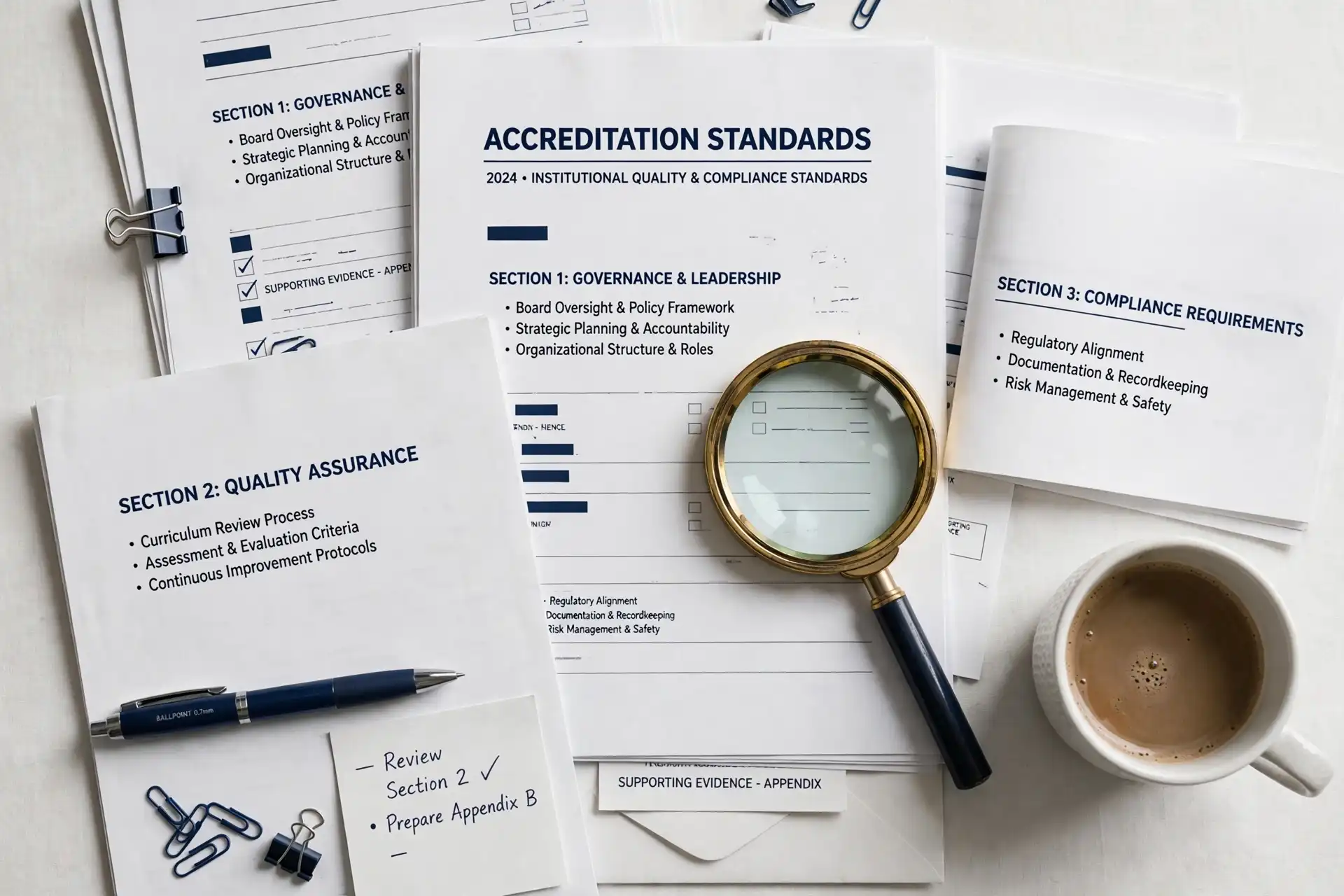
Students, Families and Employers
Fake Accreditation Warning Signs: Spot Them, Report Them
Knowing the fake accreditation warning signs protects students, families and employers. This guide lists the signs and shows how to check and report a claim.
Genuine accreditation can be checked
Genuine accreditation always leads to a public record. If a claim cannot be checked, treat it with caution.
The fake accreditation warning signs apply to institutions and to accreditors themselves.
ACISC protects its name: false claims of ACISC accreditation are investigated under the misrepresentation policy.
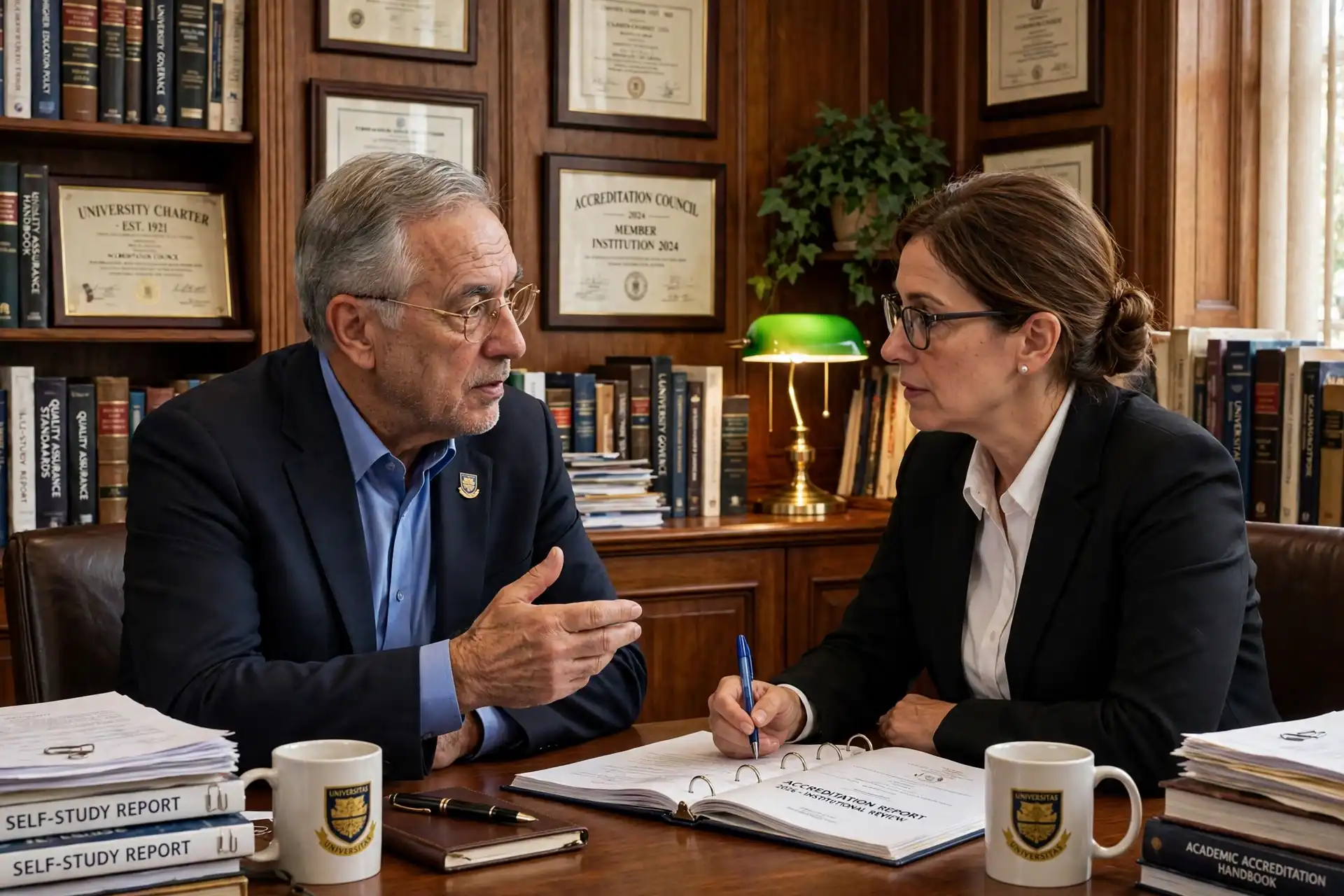
Seven warning signs
No registry
No public record to check.
Instant approval
Accreditation in days.
No standards
Nothing published.
Life experience
Degrees for experience alone.
Pressure
Pay now, decide later.
Dead logos
Badges that link nowhere.
Checking and reporting
Check every claim of ACISC accreditation in Organization Search. If the institution is not listed, or the program is outside scope, report it.
Share these fake accreditation warning signs with students and families in your community.
Checklist
- Claim checked in the registry
- Program scope confirmed
- Certificate QR scanned
- Concern reported if needed
- Evidence kept
How this connects to the whole process
Every part of ACISC accreditation links to the next. These are the points institutions ask about most, and how fake accreditation warning signs fits in.
Before you apply
Check eligibility, read the standards and attend the Initial Accreditation Workshop so your team understands what evaluators look for.
During the review
Keep evidence organised, respond to findings on time and keep your community informed about each stage.
After the decision
Report annually, notify ACISC of substantive changes and keep your public information consistent with your record.
This summary of fake accreditation warning signs reflects ACISC’s current published standards and policies.
Throughout, the separation of roles stays the same: institutions provide evidence, evaluators verify it, an independent committee reviews the record and the ACISC Council decides. Every decision is made by the ACISC Council on the documented evidence and recorded in the public registry.

Outcomes that matterStudent achievement is evidence of quality, measured and used to improve. (fake accreditation warning signs) 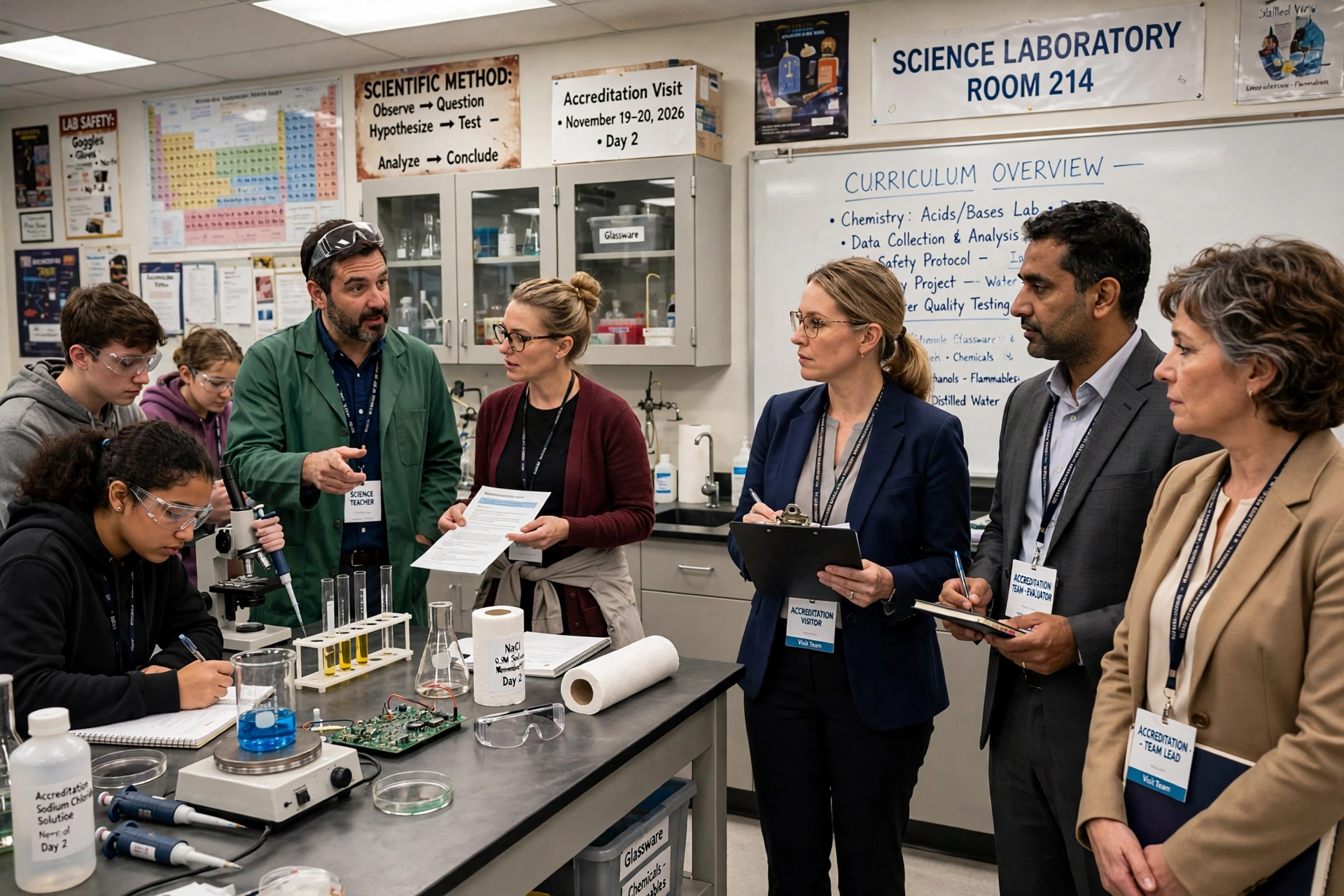
Self-study in progressTeams map practice against each standard and gather the evidence behind it. 
Evaluation in the classroomPeer evaluators observe learning first-hand to test what the self-study reports.
Fake accreditation warning signs: frequently asked questions
Short answers about fake accreditation warning signs.
How do I report a false claim?
Use the misrepresentation route or contact ACISC.
What happens after a report?
ACISC investigates and may take public action.
Is my report confidential?
Yes, as set out in the policy.
Upholding excellence in education worldwide
The Accrediting Council for International Schools and Colleges upholds excellence in education worldwide. We set the standards that define quality, and we accredit the schools, colleges, universities and training providers that meet them.
Our work brings together educators, quality specialists and institutional leaders from around the world. Through self-study, peer review and continuing accreditation, ACISC helps institutions strengthen teaching, learner support, governance and outcomes, year after year. This guide to fake accreditation warning signs reflects the ACISC standards and policies in force.
Published standards
Nine international standards that define quality for every kind of institution.
Expert peer review
Experienced evaluators who examine evidence in depth, on site or virtually.
Council decisions
Formal accreditation decisions made by the ACISC Council.
A public registry
Every accredited institution and its approved scope, on record.
ACISC key facts
The essentials of fake accreditation warning signs and ACISC, in one place.
| Topic | Fact |
|---|---|
| Who we are | The Accrediting Council for International Schools and Colleges upholds excellence in education worldwide, with offices in London and New York. |
| Who can apply | Schools, colleges, universities, distance providers, technical institutes, corporate academies, training, professional and continuing education providers and other eligible categories, subject to ACISC standards, capacity, jurisdiction and approval. |
| What accreditation covers | The institution as a whole and every program, campus and delivery mode it declares in its official publications and in its signed accreditation agreement with ACISC, as listed in the approved scope on its public record. |
| How we evaluate | Eight stages: eligibility, application, self-study, external evaluation, report and response, professional review, Council decision and continuing review. |
| What we evaluate | Nine standards, from mission and governance to student achievement and continuous improvement, tested with documentary, implementation and effectiveness evidence. |
| Who decides | The ACISC Council, on the documented record, after independent review. Every decision rests on the documented evidence. |
| Where to check | Every decision produces a public record of status, approved scope and dates in Organization Search. |
| How to reach us | info@acisc.org · +44 20 4577 0477 · 18 King William Street, London EC4N 7BP · 1177 Avenue of the Americas, New York, NY 10036. |
Related pages
Further reading
Check any institution in seconds
Search the official ACISC registry. Our team can help you recognise fake accreditation warning signs.